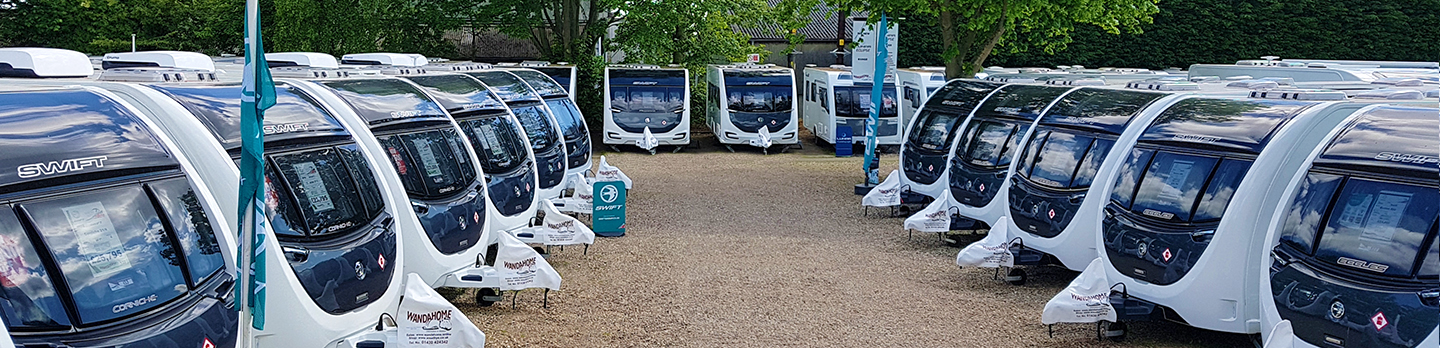

185 caravans and motorhomes now in stock

All our stock is 70 point checked and prepared before sale

Explore our vehicle display in its tranquil 16 acre woodland site
Motorhome Running Costs in 2026: Fuel, MPG and Is It Still Worth It?
Posted 30/03/2026
Author: Hellen Dimmock
Quick Summary: Motorhome Fuel Costs in 2026
- Motorhome fuel costs have increased alongside UK fuel prices
- Smaller motorhomes and campervans offer significantly better MPG
- Diesel engines remain the most efficient option
- Staycations continue to offset travel costs compared to flights
- Running costs depend more on how you travel than the vehicle alone
Are Motorhomes Still Affordable to Run in 2026?
For many buyers, fuel cost is one of the first concerns — particularly when comparing motorhomes to traditional holidays. It’s easy to assume that fuel will be the biggest expense, especially on longer trips.
Take a typical example: a couple planning a two-week break. On paper, the fuel cost might seem high, but when you compare it to flights, hotels and car hire, the overall cost often works out very differently. That’s where motorhome travel tends to surprise people. It’s not about being the cheapest option in isolation - it’s about how the total cost compares once everything is included.
This has become even more relevant in 2026. Fuel prices remain unpredictable, while international travel has become more expensive and, at times, less reliable. Flights, baggage costs and accommodation prices can quickly add up, particularly for families, which has driven a continued rise in UK staycations.
Motorhomes sit right in the middle of this shift. While they are not the cheapest vehicles to run on fuel alone, they offer something different - a way to combine transport, accommodation and flexibility into a single cost. The question is no longer just “how much fuel does it use?”, but whether the overall cost of travel still works in your favour.
What MPG Does a Motorhome Get in the UK?
Fuel economy varies significantly depending on the type and size of motorhome. In general, smaller and lighter vehicles will always perform better than larger, heavier models.
|
Motorhome Type |
Average MPG |
|
Campervan (Class B) |
30-40 MPG |
|
Coachbuilt Motorhome |
18-30 MPG |
|
A-Class Motorhome |
18-26 MPG |
European diesel motorhomes tend to sit at the higher end of efficiency, while larger petrol-powered vehicles, particularly older imports, will consume considerably more fuel.
Why Fuel Costs Matter More in 2026
Fuel has always been a factor in motorhome ownership, but in 2026 it plays a much bigger role in decision-making.
There are three main reasons for this:
- Fuel price volatility – Fuel price volatility has become more noticeable in recent years, making it harder to predict travel costs in advance.
- Rising travel costs elsewhere – flights, hotels and car hire have all increased
- Greater demand for UK travel – more people are choosing to holiday domestically
This has shifted the conversation. Rather than looking purely at MPG, buyers are weighing total travel cost - and motorhomes still compare well when used regularly.
Is a Motorhome Cheaper Than Flying?
This depends entirely on how you use it, but in many cases, it can be.
A typical comparison for a family holiday might include:
- flights for multiple people
- accommodation costs
- car hire or transfers
- food and additional travel expenses
With a motorhome, many of these are combined. While fuel is a visible cost, accommodation is either reduced or removed entirely, and travel becomes more flexible.
For longer trips, or multiple holidays throughout the year, this can make motorhome travel more cost-effective overall, even with higher fuel usage.
What Affects Fuel Consumption in a Motorhome?
Fuel consumption isn’t just about engine size. In practice, it’s influenced by how you drive, what you carry and the conditions you travel in.
Vehicle Size and Weight
Heavier motorhomes require more energy to move. Larger A-class models or fully loaded vehicles will always consume more fuel than compact campervans.
Driving Style
Smooth, consistent driving improves efficiency. Rapid acceleration, heavy braking and high speeds increase fuel consumption noticeably.
Load and Storage
Carrying excess weight - including water, equipment or bikes - increases strain on the engine and reduces MPG.
Terrain and Weather
Hilly routes, strong winds and colder temperatures can all reduce fuel efficiency, particularly on longer journeys.
Towing
Towing a car or trailer adds weight and drag, increasing fuel consumption, especially on inclines.
Do New or Used Motorhomes Make a Difference to Fuel Costs?
Fuel efficiency isn’t just about the type of motorhome you choose - whether it’s new or used can also make a difference in real-world running costs.
Newer motorhomes tend to benefit from:
- improved engine efficiency
- updated emissions standards
- more refined gearboxes and driving systems
- lighter construction in some modern designs
These changes can lead to slightly better fuel economy, particularly on longer motorway journeys or when driving consistently.
Used motorhomes, however, can still be efficient depending on how they’ve been maintained. A well-serviced vehicle with a good history can perform very similarly to a newer model in everyday use. The main differences tend to come from:
- older engine technology
- heavier construction in some models
- reduced optimisation compared to newer designs
In practice, condition matters more than age. A well-maintained used motorhome that’s driven efficiently can deliver comparable running costs, especially for occasional trips or shorter journeys.
Diesel vs Petrol: Which Is Better?
In the UK market, diesel motorhomes are generally the more efficient option.
- Diesel engines are typically more fuel-efficient. This is one of the reasons diesel engines tend to be the preferred choice for larger motorhomes.
- They produce better torque for heavier vehicles
- They allow longer travel distances per tank
Petrol motorhomes, while less common in Europe, are usually less efficient and more suited to lighter or older vehicles.
How to Improve Fuel Efficiency
There are practical ways to reduce fuel consumption without changing your vehicle.
- Maintain a steady speed, ideally around 55–60mph, as this is where most motorhomes tend to be at their most efficient.
- Keep tyres correctly inflated
- Reduce unnecessary weight
- Avoid long periods of idling
- Plan routes to avoid stop-start traffic
- Keep up with regular servicing and maintenance
These small adjustments can make a noticeable difference over longer trips.
The Real Cost of Running a Motorhome
Fuel is only one part of the overall picture. Running costs typically include:
- fuel
- insurance
- servicing and maintenance
- campsite fees (where used)
However, these costs are often offset by:
- reduced accommodation expenses
- fewer transport costs
- increased flexibility in travel plans
For many owners, the value comes from how often the vehicle is used, rather than the cost of individual trips.
What Does It Actually Cost to Drive a Motorhome?
Fuel costs are easier to understand when you put them into a real-world example rather than just looking at MPG figures.
Let’s take a typical scenario:
- A mid-sized coachbuilt motorhome averaging 25 MPG
- Diesel at roughly £1.55 per litre (this will vary depending on location and timing)
- A 300-mile trip
This would work out at approximately:
-
£80–£95 in fuel for the journey
On its own, that might seem high compared to everyday driving. However, when you compare it to the combined cost of flights, accommodation and local transport, the picture changes quickly.
For example, a family trip involving:
- flights
- hotel stays
- car hire or transfers can often exceed this cost significantly, especially during peak travel periods.
The key point is that fuel is only one part of the overall cost. For longer trips or multiple holidays throughout the year, the ability to combine travel and accommodation often offsets the higher fuel usage.
In practice, many motorhome owners find that the more they use their vehicle, the better the overall value becomes. This is why fuel cost alone rarely tells the full story - it needs to be considered alongside how you travel and how often you use the motorhome.
Should Fuel Efficiency Influence Your Choice?
- better fuel economy
- easier handling
- lower running costs
- more space
- greater comfort
- better long-term usability
Which Motorhome Brands Offer Better Fuel Efficiency?
Fuel efficiency isn’t just about size - it often comes down to how a motorhome is designed and built. Some brands focus on lighter construction, aerodynamic profiles and efficient layouts, which can make a noticeable difference over time.
In the UK market, several manufacturers are known for producing motorhomes that balance performance with efficiency:
- Adria Motorhomes and Sun Living Motorhomes are well known for lighter, streamlined models that tend to deliver strong fuel economy, particularly in campervan and compact coachbuilt ranges
- Swift Motorhomes offer a wide mix of sizes, with smaller coachbuilt models often sitting in a more efficient range
- Dethleffs Motorhomes and Giottiline Motorhomes provide a balance between space and efficiency, particularly in mid-sized vehicles
- Fleurette Motorhomes focus on premium builds, where efficiency is balanced with comfort and specification
- Coachman Motorhomes and Ace Motorhomes tend to sit towards the more spacious end of the market, where fuel consumption is higher but offset by increased living space and touring capability
The best way to understand the difference is to compare models across these ranges, as fuel economy varies significantly depending on layout, weight and intended use.
Motorhome running costs in 2026 are less about fuel alone and more about how you choose to travel. While fuel prices remain a factor, the ability to combine transport, accommodation and flexibility into one experience continues to make motorhomes a strong alternative to traditional holidays.
For many people, the value lies not just in cost, but in control - choosing where to go, when to travel, and how to experience it.
FAQs
What MPG does a motorhome get in the UK?
Most motorhomes achieve between 18 and 40 MPG depending on size, weight and engine type.
Are motorhomes expensive to run?
They can be, but overall costs are often balanced by savings on accommodation and travel flexibility.
Is diesel better for motorhomes?
Yes. Diesel engines are generally more efficient and better suited to heavier vehicles.
Does weight affect fuel consumption?
Yes. Heavier motorhomes require more power, which increases fuel usage.
Are motorhome holidays cheaper than flying?
In many cases, particularly for families or longer trips, motorhome travel can be more cost-effective overall.